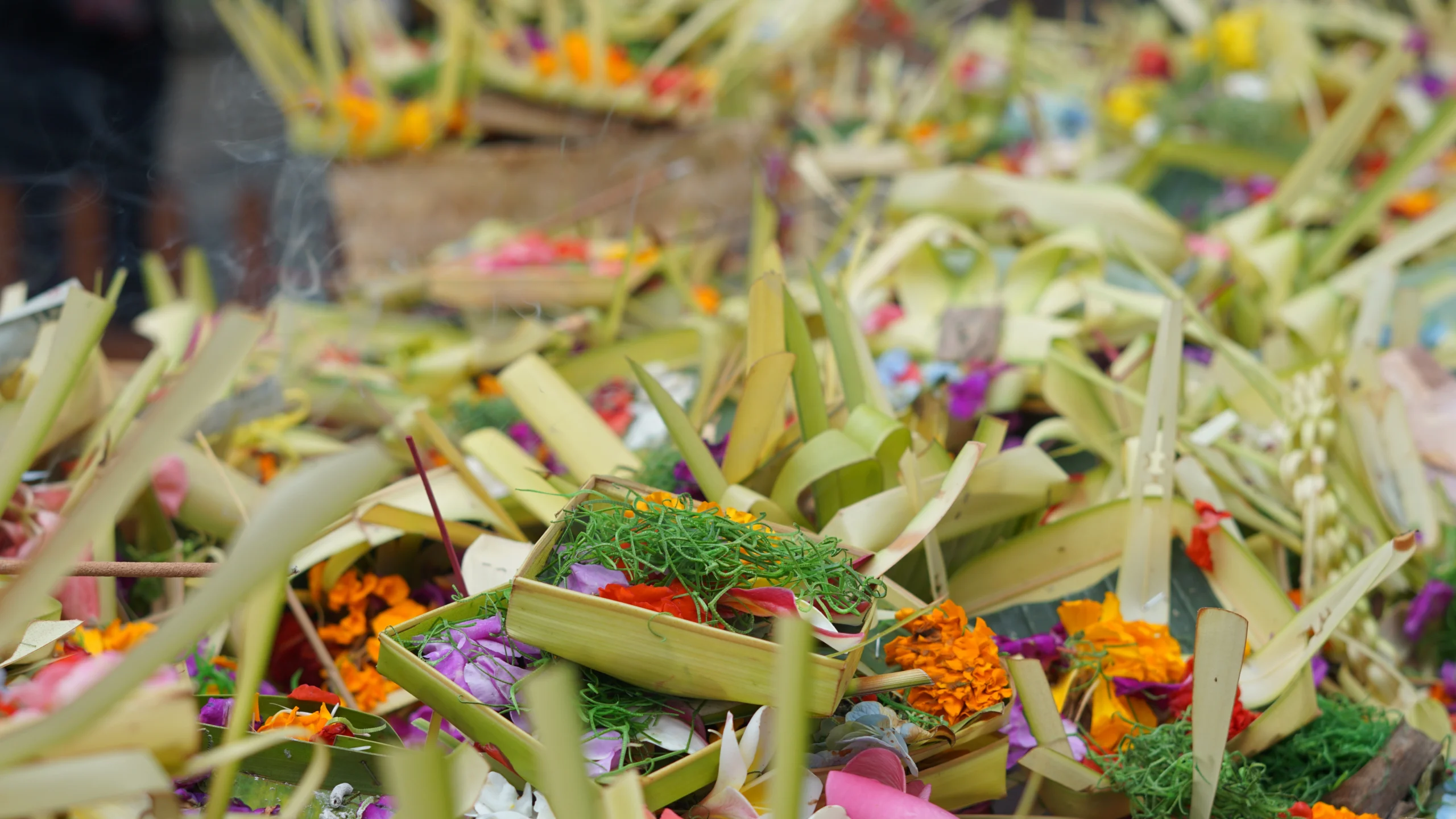
If you take an early morning walk in Bali, you’ll notice Canang Sari, a small palm-leaf trays filled with flowers and incense, placed in front of homes, temples, and even on the side of the road. These offerings are one of the most meaningful symbols of Balinese Hindu life. Yet many visitors, and even some locals, see them without fully understanding the intention behind them
So What Exactly is Canang Sari?
Derived from the ancient Kawi language, the word Canang is a blend of “Ca” (beautiful) and “Nang” (purpose), while Sari translates to essence. Together, they describe a ritual meant to be the “essence of a beautiful purpose.” Far more than just roadside decorations, these are physical acts of gratitude, designed with symbolism behind every element.
In Balinese Hindu practice, the Canang Sari is considered the smallest yet most essential offering. No matter how grand a ceremony might be, it is never complete without one. Its true value lies in the intention behind it, making it the simplest and most genuine expression of gratitude found in everyday Balinese life.
The Meaning of Each Element in Canang Sari
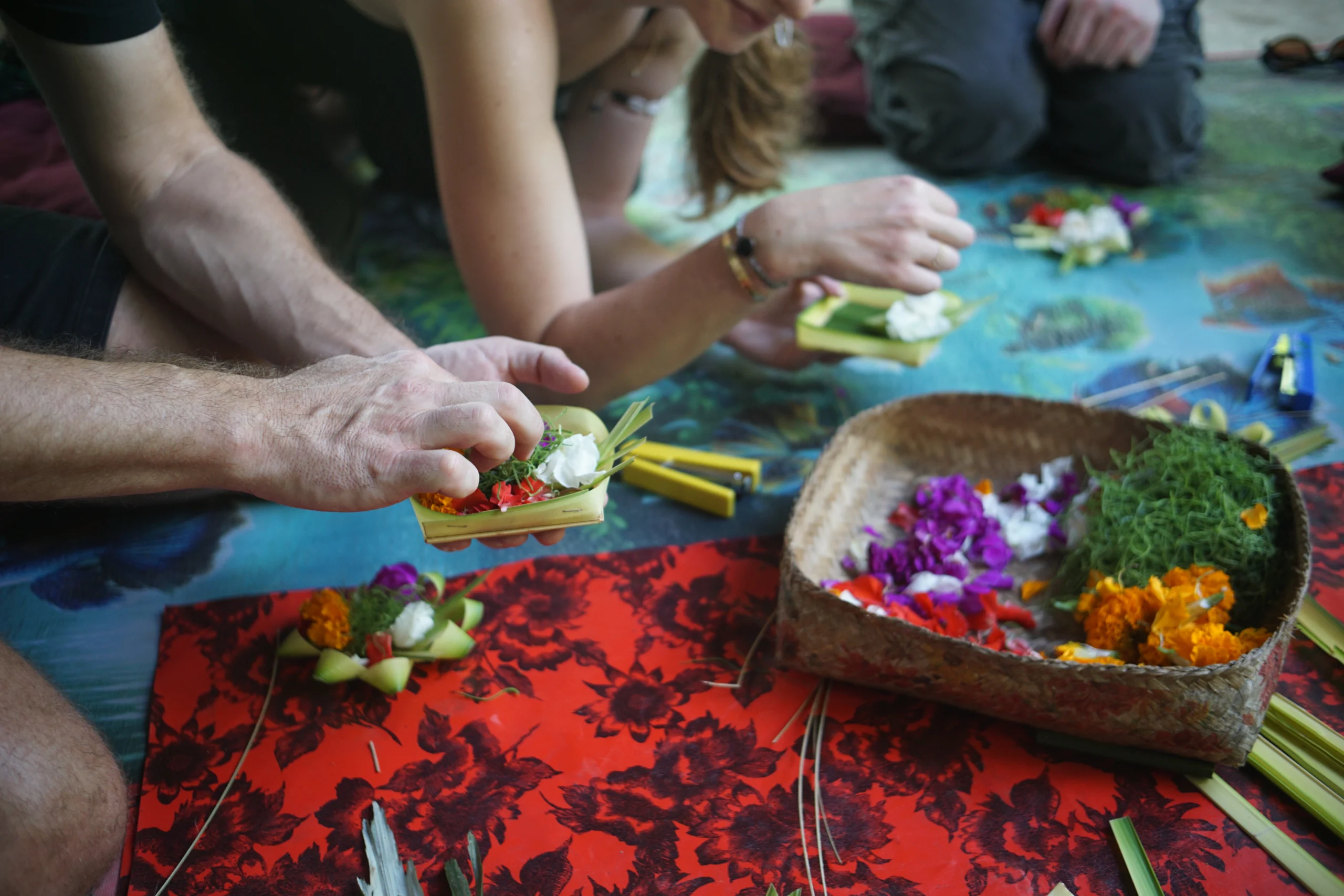
Every component of a canang sari holds a specific meaning. While some offerings are more intricate, each one must include these fundamental elements.
Ceper (base)
Made from young palm leaves and shaped into a tray. It represents the human body.
Porosan
A mix of betel leaf, lime, and areca nut or gambier. It symbolizes the Tri Premana: bayu (energy), sabda (voice), and idep (thought).
Flowers
Placed in specific directions according to sacred teachings
- White in the east for Sang Hyang Iswara
- Red in the south for Sang Hyang Brahma
- Yellow in the west for Sang Hyang Mahadewa
- Dark flowers in the north for Sang Hyang Siwa
Pandan leaf
A thin slice of pandan leaf is placed in the center as a symbol of the Panca Dewata
These arrangements are intentional and reflect respect toward the deities. One of the things that makes Bali feel special is the gratitude put into daily life. Preparing a canang sari, whether simple or elaborate, is a quiet way to begin the day with a sincere expression of thanks.
A Note for Everyone
As you explore the busy sidewalks of Bali, keep an eye out for these little baskets. If you spot one, especially if the dupa is still glowing, try to step around it as a simple gesture of respect. Feel free to pause and admire the colors and weaving, but please remember they are spiritual gifts for the gods, not souvenirs to take home.
By the end of the day, you might see the offerings scattered, stepped on, or eaten by stray animals. Don’t worry, this is completely normal. Once the prayer is offered, the physical basket is meant to degrade and return naturally to the earth.
Learning Through Doing, not Explanation
Most people don’t get the chance to understand the canang sari. They may see the colors, the flowers, but not the meaning behind them. And honestly, that’s fair. Even for locals, canang is something you grow up doing, not something you’re formally taught. The meaning is absorbed through practice, not instruction.
For people who want to truly understand canang sari, which is not just about its appearance, but what it represents, the best way is to experience it with someone who lives this tradition every day.
Learn with Pak Mardika
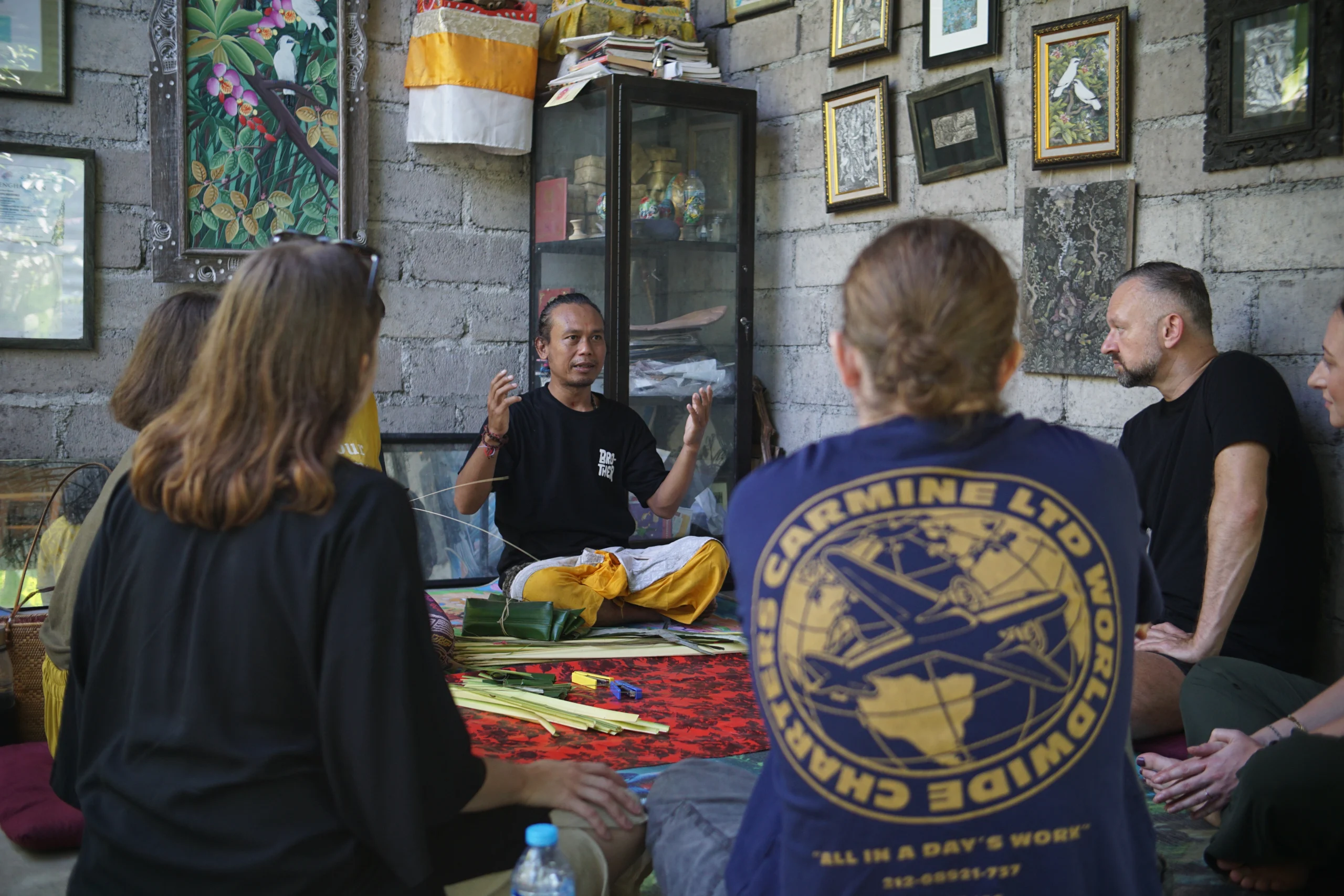
Meet Pak Mardika, a Balinese artist dedicated to preserving local traditions. Known for his Keliki Kawan painting style, he also guides people who want to explore Balinese spirituality through hands-on cultural experiences.
With him, you’ll learn:
- the meaning behind each flower
- different types of canang sari
- why intention matters more than form
Ready to Experience Balinese Spirituality?
Join our cultural immersion and discover the genuine Bali life through canang sari making, meditation, and a sacred purification ritual.